

October 1, 2026
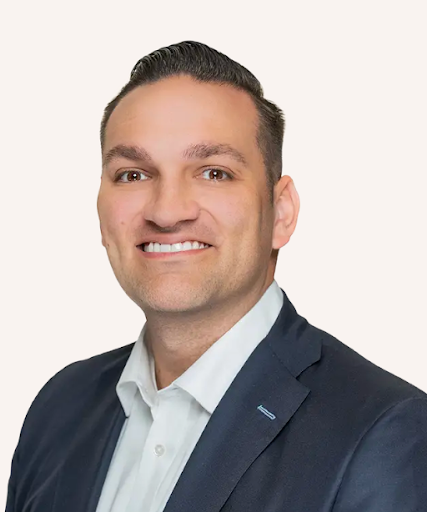
Real estate investors spend years mastering one skill: finding deals that pencil out, financing them well, and executing on time. What often gets less attention is what happens to all of that equity once it's built, a gap YTS Wealth Management was built to assist with. YTS is an award winning firm and recipient of the Fast 50 Award 2025*, serving clients across Pennsylvania and the DC Metro Area through a coordinated approach the firm calls Your Total Solution, bringing investment management, financial planning, tax aware strategies, and insurance together under
one platform. That discipline has helped the firm grow to more than a billion dollars in client assets while staying hands on with clients along the way.
At We Lend, we see that same discipline earlier in the process. Our borrowers run the numbers on cap rate, exit strategy, and carrying costs before they ever call us, which is why we built our underwriting to move just as fast, term sheets in an hour, closings in days. That shared instinct for diligence is what drew us to this conversation with YTS, whose clients apply the same rigor to a different question: whether their overall wealth is working as hard as the deals that built it.
We sat down with Nick Subich, founder of YTS Wealth Management, to talk through that question. Subich started the firm in 2019 and has grown it into a firm managing more than a billion dollars in client assets, built around a hands on, client first approach even as the firm has scaled. Here's what he told us about the moment a real estate portfolio starts to outgrow a deal by deal mindset.
Q: Many of our borrowers at We Lend are real estate investors who've built significant equity through their deals. At what point should someone shift from just 'growing a portfolio' to actively managing their wealth?
A: It's usually a size problem before it's a planning problem. Once someone holds four or five properties, or their equity crosses into seven figures, decisions stop being independent, a refinance on one property can quietly undo an assumption baked into another. That's the real trigger, the moment a single decision can no longer be made in isolation, and it's exactly when a coordinated plan starts doing for their finances what a good deal team does for a transaction.
Q: Real estate investors often have most of their net worth tied up in property. What are the biggest blind spots you see when investors haven't diversified beyond one asset?
A: Concentration in one asset class becomes a problem the moment a market turns, many investors are heavily concentrated in real estate relative to their overall net worth, so a regional slowdown or a rate shift can move their entire financial picture at once. We start by measuring that concentration honestly, then work on making sure the next dollar earned has somewhere else to go, whether that's a taxable account, retirement contributions, or a reserve that isn't tied to a lease renewal.
Q: When a real estate investor sells a property or refinances and suddenly has a lump sum of capital, what should be the first financial planning conversation they have?
A: The first move is resisting the urge to make a move at all until there is a plan for where that capital fits. A sale or refinance often triggers a tax event, and depreciation recapture or capital gains exposure can quietly eat a meaningful share of proceeds if nobody modeled it before closing, so that planning conversation should ideally start before the wire hits the account, not after. From there, it becomes a deliberate decision, understanding the after tax number, covering any near term needs, and then weighing how much goes back into real estate versus building wealth outside the property cycle. Investors who treat every liquidity event as fuel for the next deal often miss the chance to actually bank some of the growth they worked for.
Q: How does tax-aware planning change for a client who owns investment property versus one who only holds traditional stocks and retirement accounts?
A: It's a different discipline. Real estate offers levers a standard portfolio doesn't, cost segregation, bonus depreciation, 1031 exchanges, but they only pay off when they're coordinated across properties and years rather than handled deal by deal. We build that strategy alongside the broader plan so one property's decision gets stress tested against the client's full tax position. That coordination is usually the difference between a good deal on paper and a good outcome after tax.
Q: For an investor who's just closed a deal with a private lender like We Lend and is thinking about their next move, whether that's growing the portfolio or diversifying wealth, what questions should they be asking themselves?
A: Three questions cut through most of the noise. Does this next deal meaningfully change my financial picture, or just add another moving part to manage? What share of my net worth will be in real estate once it closes, and am I still comfortable there? And is there a better use for this equity right now, given where my broader plan actually stands? Investors who ask those before signing tend to end up with a portfolio built for a goal, not just a bigger one.
Disclosure: The Pittsburgh Business Times Fast 50 is a ranking of locally owned, for-profit entities in the Pittsburgh region based on revenue growth during the three-year period from 2022-2024. The winners were announced on 11/20/2025. Businesses were required to have at least $2,000,000 in revenue in 2022 to qualify. Firms do not pay a fee to be considered for this recognition. Receiving this award is no guarantee of past or future performance.
Investments in real estate may be subject to a higher degree of market risk because of concentration in a specific industry, sector or geographical sector. Other risks can include, but are not limited to, declines in the value of real estate, potential illiquidity, risks related to general and economic conditions, stage of development, and defaults by borrower.
Securities and advisory services offered through LPL Financial, a Registered Investment Advisor, Member FINRA/SIPC.
Tag(s):